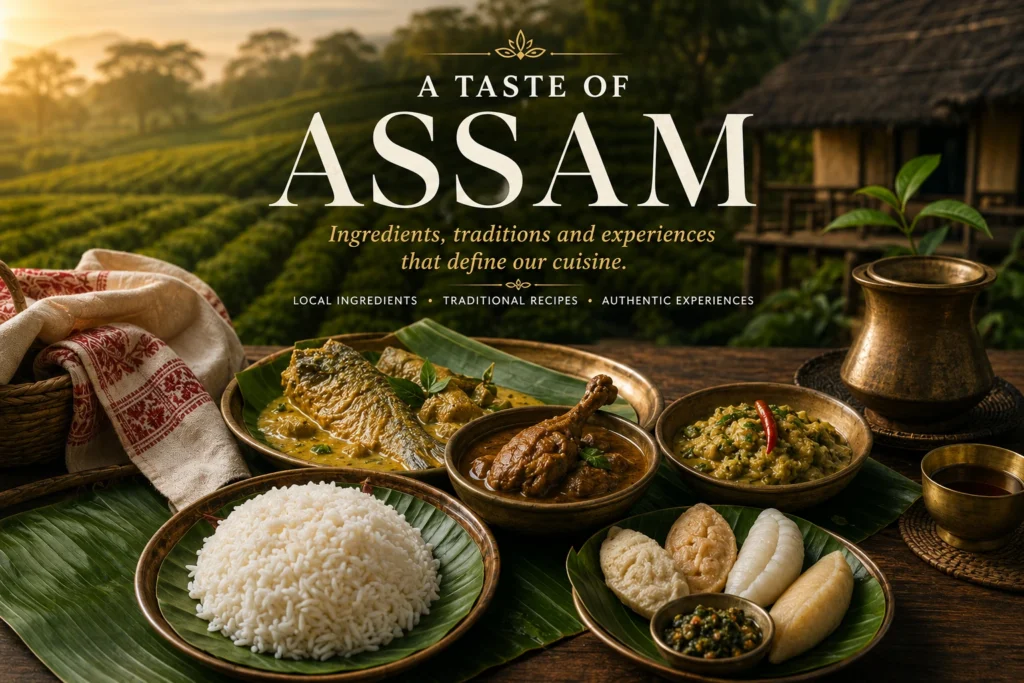
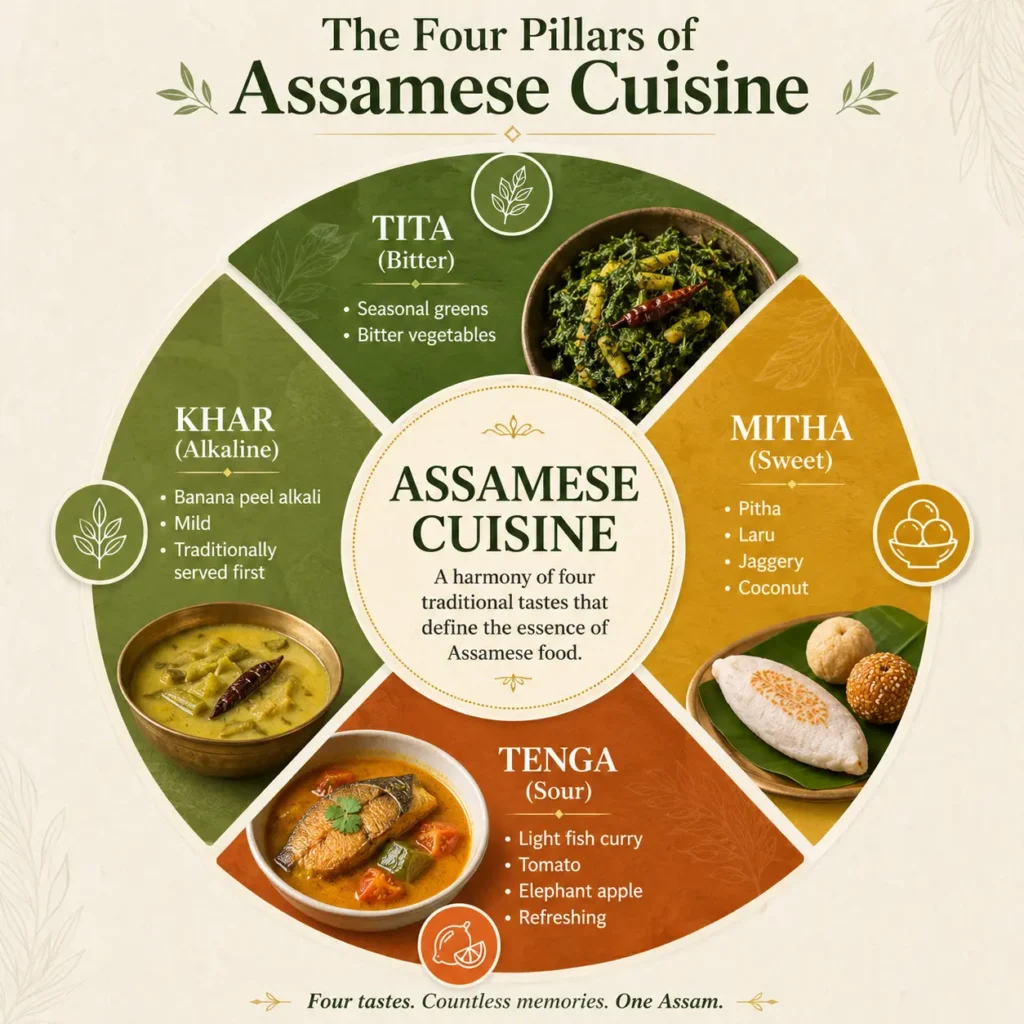
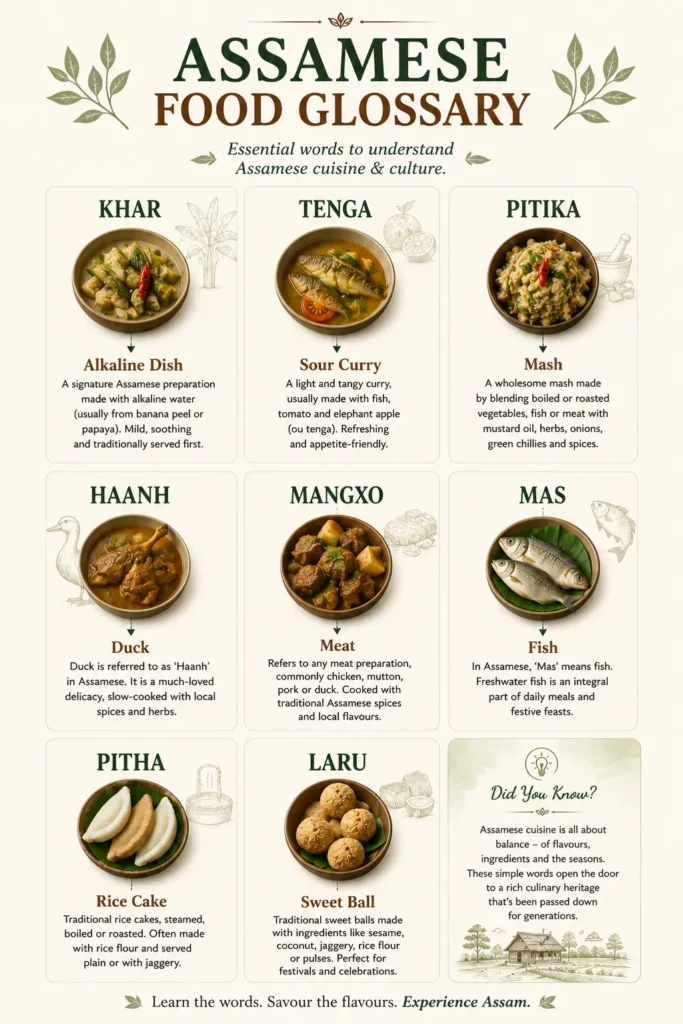
Assamese cuisine is simple, fresh, and deeply connected to nature. Unlike many Indian cuisines, it relies on natural flavors rather than heavy spices. Traditional Assamese meals are built around four key taste elements: Khar (alkaline), Tenga (sour), Tita (bitter), and Mitha (sweet)—a balanced approach to nourishment that has been followed for generations.
What food should you try in Kaziranga?
Visitors to Kaziranga should try an authentic Assamese Thali, Masor Tenga, Khar, Pitika, Duck Curry, Pork with Bamboo Shoot, traditional Pitha, and freshly brewed Assam tea. These dishes reflect the region’s local ingredients, culinary traditions, and rich cultural heritage.
What Makes Assamese Cuisine Different?
One of the reasons travelers remember Assam long after their trip ends is its cuisine. Unlike many regional Indian cuisines that rely on rich gravies and complex spice blends, Assamese food celebrates freshness, seasonality, and balance. Ingredients are often sourced locally, and the natural flavour of vegetables, fish, meat, and herbs is allowed to shine rather than being masked by heavy spices.
Traditional Assamese cooking revolves around four important flavour profiles:
- Khar – alkaline and cleansing
- Tenga – light and pleasantly sour
- Tita – mildly bitter
- Mitha – naturally sweet
This balance reflects generations of cooking traditions that evolved alongside Assam’s rivers, forests, wetlands, and fertile agricultural landscapes.
Whether you’re enjoying a simple home-cooked meal or dining at Habitas Rhino, you’ll notice that Assamese cuisine feels lighter, fresher, and deeply connected to nature.
Understanding an Authentic Assamese Thali
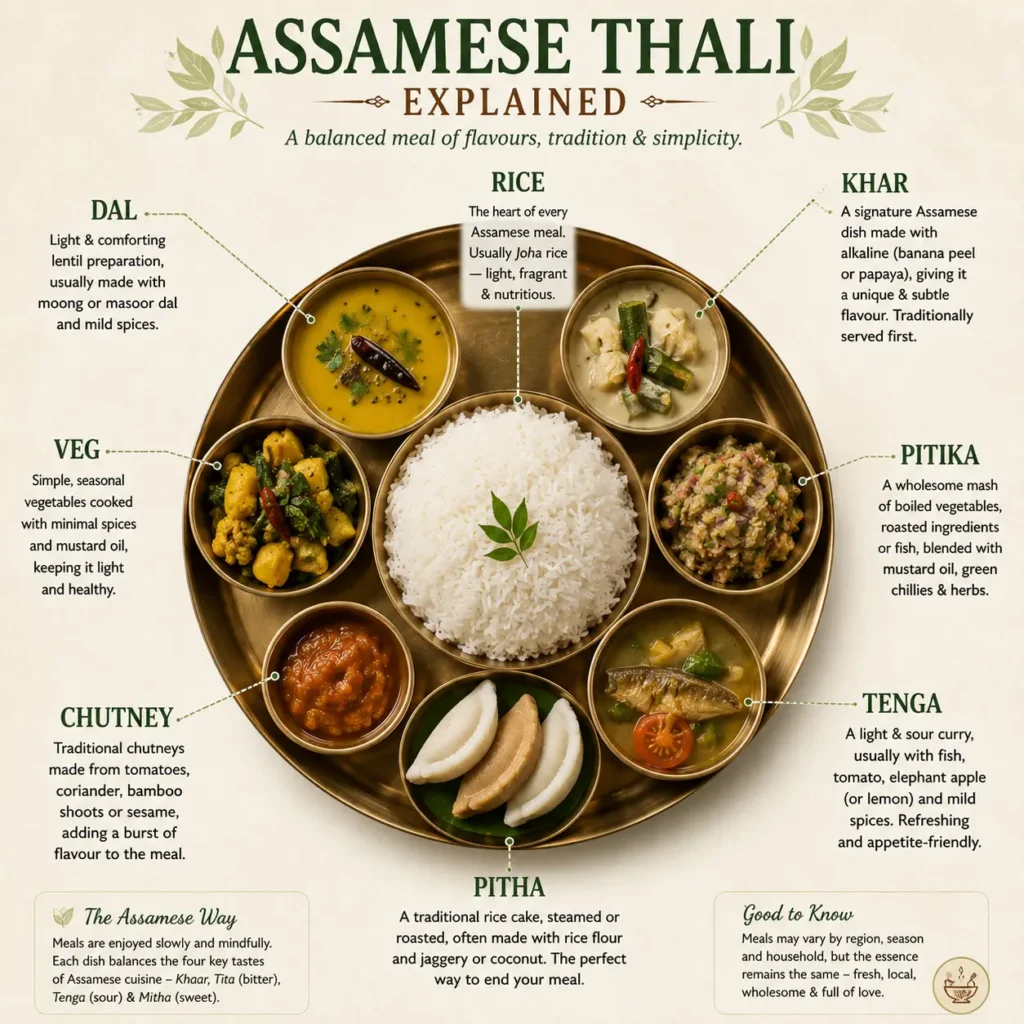
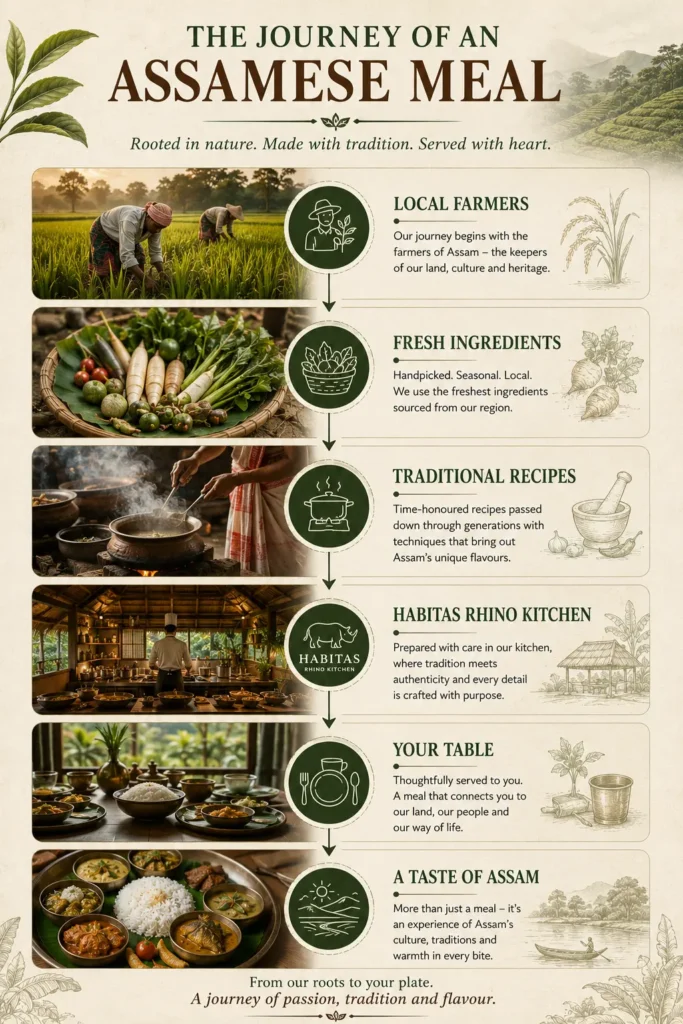
For first-time visitors, ordering an Assamese Thali is the easiest and most authentic way to experience the region’s cuisine.
Unlike restaurant platters elsewhere in India, an Assamese Thali follows a thoughtful progression of flavours.
A typical meal may include:
- Steamed Joha or local rice
- Dal
- Khar
- Seasonal vegetables
- Pitika
- Fish or meat preparation
- Masor Tenga
- Chutney
- Traditional dessert
Rather than overwhelming the palate, each dish complements the next, creating a balanced dining experience that has remained largely unchanged for generations.
Meet the Ingredients Behind Assamese Cuisine
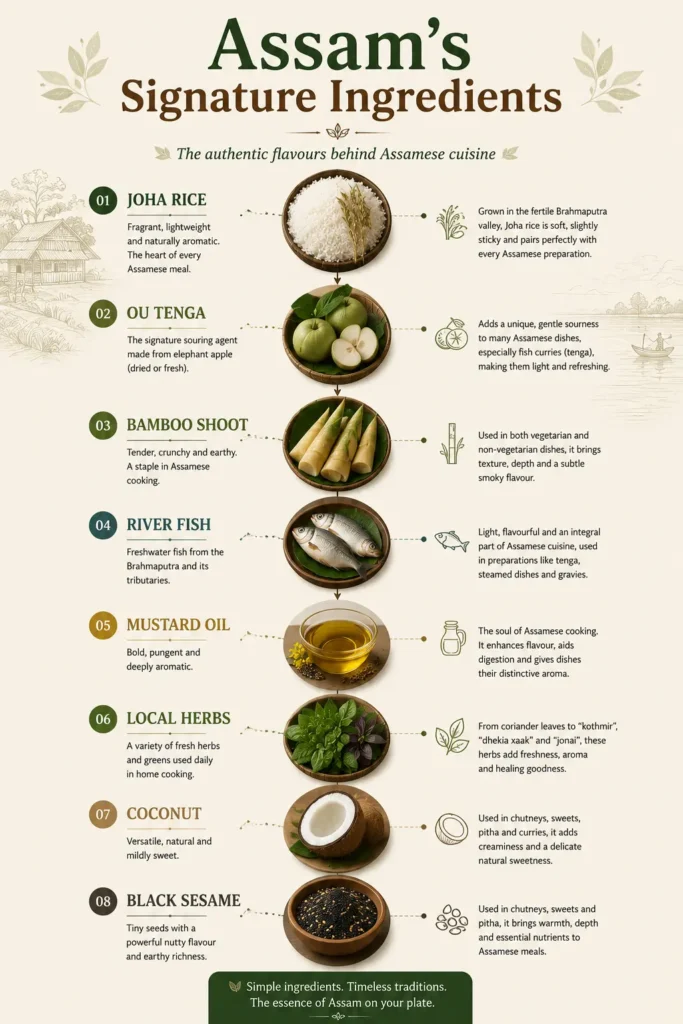
Every memorable dish begins with exceptional ingredients.
Around Kaziranga, local farmers, fishermen, and village communities supply many of the ingredients traditionally used in Assamese kitchens.
Some of the region’s signature ingredients include:
Joha Rice
A naturally aromatic indigenous rice variety known for its delicate fragrance and soft texture.
Ou Tenga (Elephant Apple)
Used to create the refreshing sourness in Masor Tenga.
Fresh River Fish
Fish sourced from Assam’s rivers remains one of the defining elements of Assamese cuisine.
Bamboo Shoots
Fresh or fermented bamboo shoots add earthy flavours to many traditional meat dishes.
Banana Flower
Commonly used in vegetarian preparations with subtle earthy flavours.
Black Sesame
Frequently used in chutneys and traditional meat preparations.
Mustard Oil
Provides the distinctive aroma found in many Assamese dishes.
These ingredients represent the agricultural heritage of Assam and give its cuisine a character that is difficult to replicate elsewhere.
Traditional Assamese Dining Culture
Food in Assam has always been about hospitality.
Meals are generally served fresh and prepared close to serving time rather than being cooked hours in advance.
Many households still follow a sequence where lighter dishes such as Khar appear early in the meal, gradually progressing towards fish, meat, Tenga, and finally dessert.
Sharing meals with family and guests remains an important part of Assamese culture, and visitors often discover that dining becomes as memorable as sightseeing.
Vegetarian Assamese Cuisine
Although Assam is well known for its fish and meat dishes, vegetarian travellers will find plenty to enjoy.
Popular vegetarian options include:
- Khar
- Aloo Pitika
- Bengena Pitika (Roasted Eggplant)
- Bilahi Pitika (Tomato Mash)
- Banana Flower Curry
- Roselle Leaf Curry
- Seasonal leafy greens
- Lentil preparations
- Traditional rice dishes
Many of these recipes rely on fresh vegetables and minimal spices, making them both comforting and flavourful.
Tea & Assamese Food — The Perfect Pairing
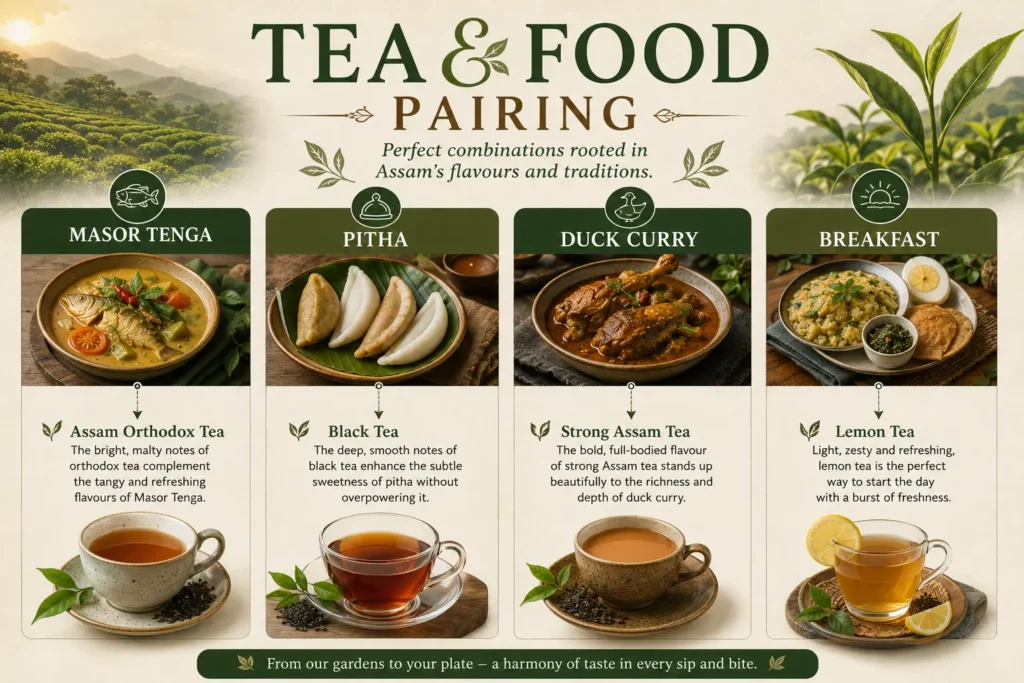
No culinary journey through Assam is complete without tea.
Being surrounded by tea gardens, Habitas Rhino offers guests an opportunity to enjoy fresh Assam tea alongside local cuisine.
Depending on the time of day, guests may enjoy:
- Strong Assam Orthodox Black Tea
- Green Tea
- Fresh Lemon Tea
- Herbal Tea
Morning tea overlooking the surrounding tea gardens has become one of the most memorable experiences for many visitors.
Seasonal Assamese Specialities
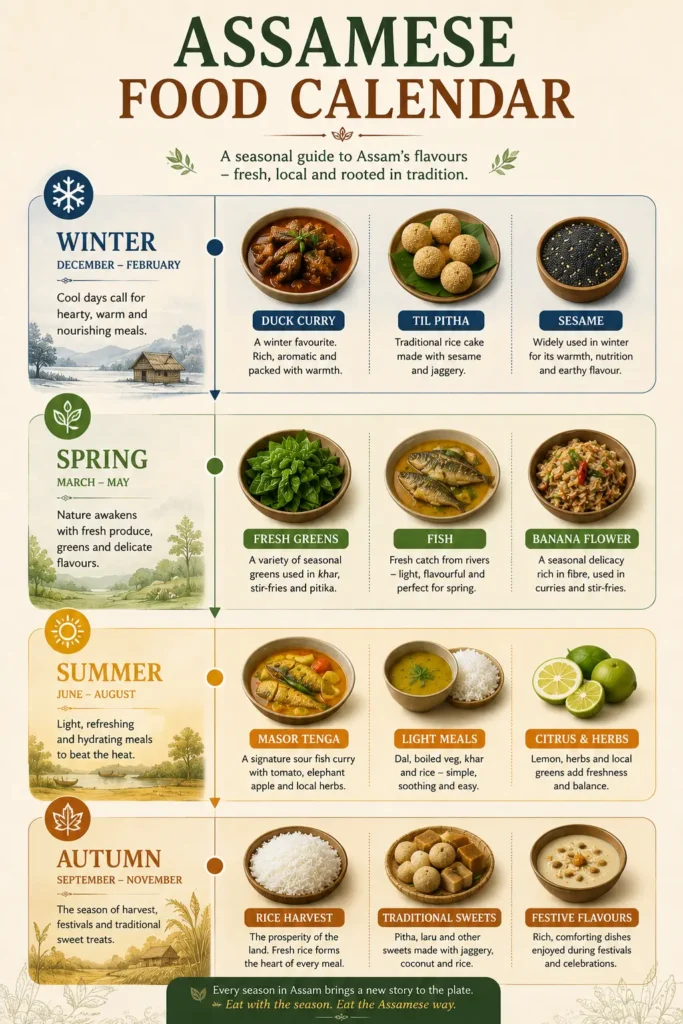
Just as wildlife changes throughout the year, so does the local cuisine.
Winter
- Duck Curry
- Pork with Bamboo Shoot
- Til Pitha
- Sesame Sweets
Spring
- Fresh seasonal vegetables
- Banana Flower dishes
- River fish preparations
Monsoon (where available)
- Fresh leafy greens
- Traditional vegetarian dishes
- Seasonal fish recipes
Seasonality remains an important part of Assamese cooking, and many dishes taste their best when prepared using ingredients harvested during their natural growing period.
Must-Try Assamese Dishes
Assamese Thali
The best introduction to Assamese food, featuring rice, dal, vegetables, pitika, fish or meat, khar, tenga, chutneys, and seasonal specialties.
Masor Tenga
Assam’s signature fish curry, light and tangy, prepared with tomatoes, lemon, elephant apple (Ou Tenga), or local herbs.
Khar
A uniquely Assamese preparation made using alkaline extract from sun-dried banana peels, usually cooked with vegetables or pulses.
Pitika
A traditional mash of potato, roasted eggplant, tomato, or fish mixed with mustard oil, onions, and green chilies.
Duck Curry (Haanh Mangxo)
A classic Assamese delicacy, often cooked with ash gourd, sesame, or bottle gourd.
Pork with Bamboo Shoot
One of Northeast India’s most loved dishes, combining tender pork with fresh or fermented bamboo shoots.
Sunga Saul & Sunga Mangxo
Rice, fish, or meat slow-cooked inside fresh bamboo over fire, absorbing a distinctive smoky bamboo aroma.
What Should First-Time Visitors Try?
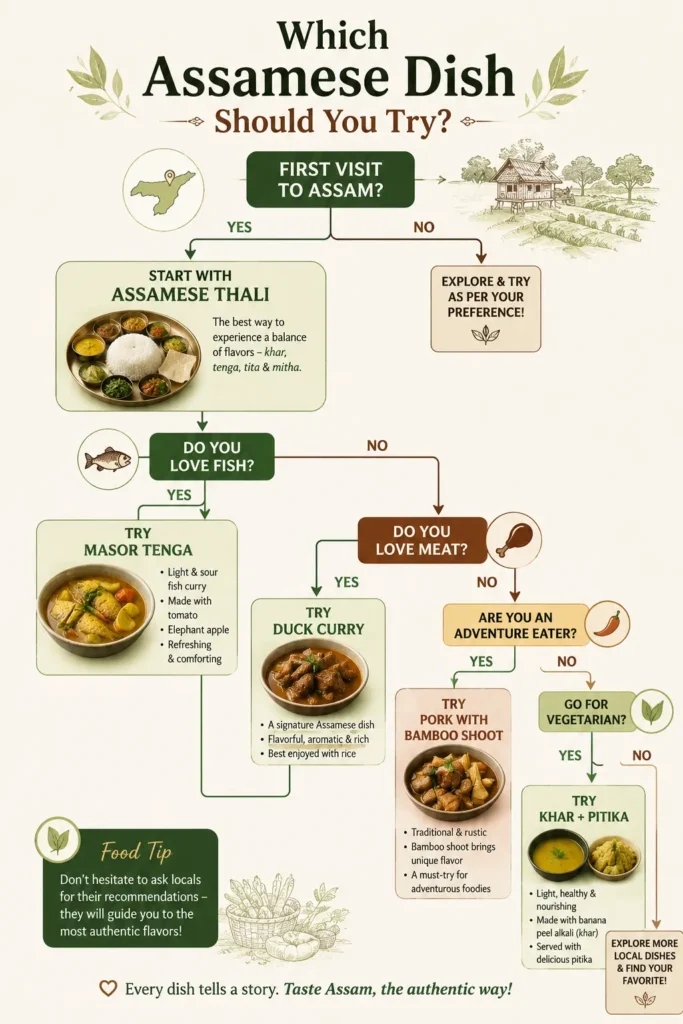
If this is your first visit to Assam, we recommend the following order:
- Assamese Thali
- Masor Tenga
- Khar
- Pitika
- Duck Curry
- Pork with Bamboo Shoot
- Traditional Pitha
- Fresh Assam Tea
This progression offers a balanced introduction to the flavours that define Assamese cuisine.
Indigenous Tribal Flavours
Kaziranga is home to Karbi, Mising, and other indigenous communities known for their unique culinary traditions:
- Smoked Pork
- Bamboo Shoot Preparations
- Banana Flower Curry
- Roselle Leaf Curry
- Mising-style Fish & Meat Dishes
Traditional Assamese Breakfast & Sweets
Til Pitha – Rice rolls filled with sesame and jaggery
Narikol Pitha – Coconut-filled rice cakes
Chira-Doi-Gur – Flattened rice with curd and jaggery
Til Laru & Narikol Laru – Traditional sesame and coconut sweets
If You Only Try a Few Dishes…
✔ Assamese Thali
✔ Masor Tenga
✔ Khar
✔ Pitika
✔ Duck Curry (Haanh Mangxo)
✔ Pork with Bamboo Shoot
✔ Smoked Pork
These dishes offer the most authentic taste of Assam and provide a cultural experience that goes far beyond the wildlife of Kaziranga.
If you’re positioning Habitas Rhino as the best place for authentic Assamese food, focus on why the experience is more authentic, not just what is served.
Why Habitas Rhino Offers One of the Most Authentic Food Experiences in Kaziranga
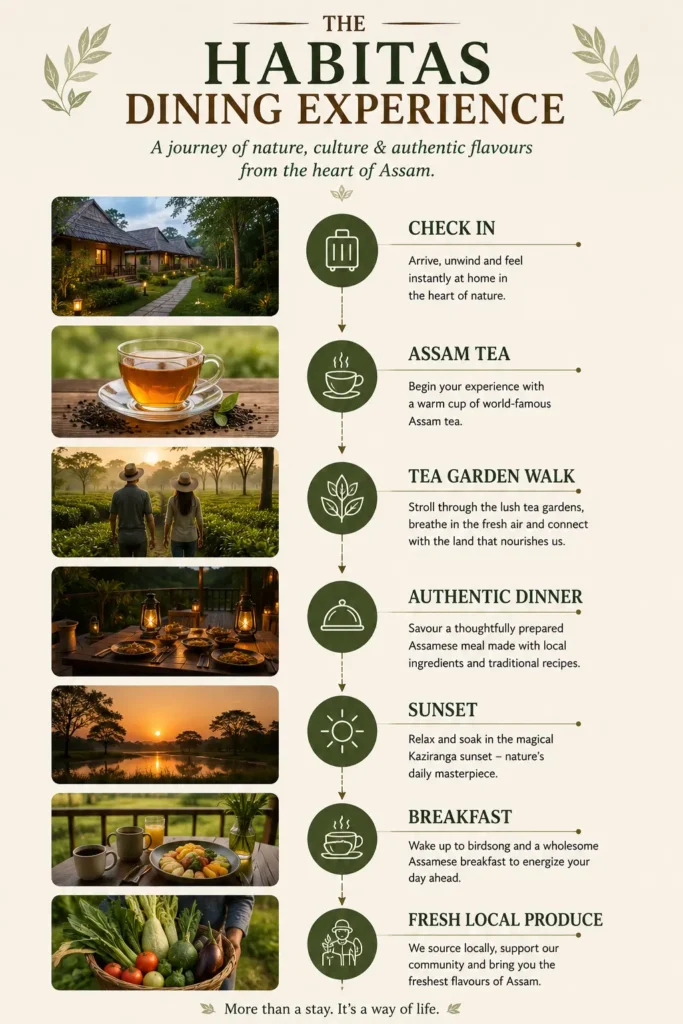
At Habitas Rhino, authenticity begins long before the food reaches your plate. The kitchen works closely with local farmers, fishermen, and village suppliers around Kohora, ensuring ingredients are fresh, seasonal, and deeply connected to the region. This approach reflects the essence of Assamese cuisine, which relies on ingredient quality and natural flavors rather than heavy spices.
Unlike many hotels that offer standardized menus, Habitas Rhino celebrates traditional Assamese dishes such as Masor Tenga, Khar, Pitika, Duck Curry, and Pork with Bamboo Shoot, prepared using local ingredients and time-honored cooking methods. These dishes represent the culinary heritage of Assam and the communities surrounding Kaziranga.
What further sets Habitas Rhino apart is its balance of authenticity and refinement. Traditional recipes are preserved, while presentation, cooking precision, and dining ambience are elevated to create a memorable culinary experience. Guests consistently praise the freshness and quality of the food, much of which is prepared to order rather than pre-cooked.
For travelers seeking more than just a meal, dining at Habitas Rhino is an opportunity to experience the flavors, traditions, and agricultural heritage of Assam in a setting that reflects the spirit of Kaziranga itself.
If you are not an in house guest call to book a table for lunch or dinner as everything is prepared fresh from the scratch.